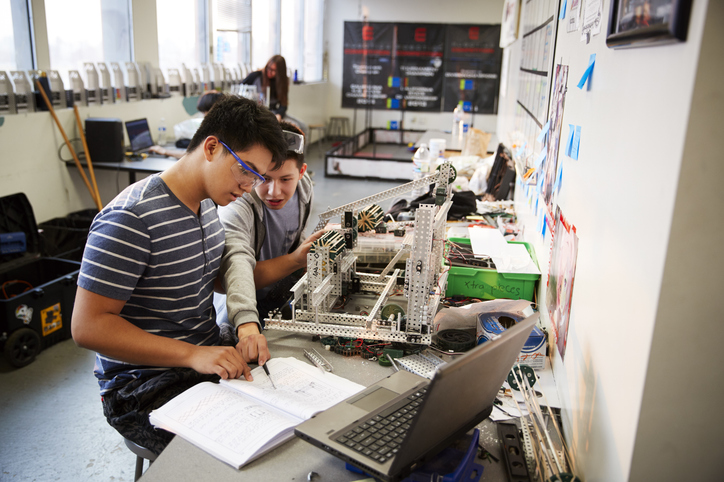
Why slowness is a superpower in creative education
Good ideas often appear in the quiet moments we don’t count as work. David Thompson argues for protecting incubation time and for helping students rediscover the value of disconnection
Students around the globe are usually under pressure to perform well in their examinations. The level of intensity experienced in this stress is even higher in the US, given its tough and high-quality education system. Several students use an assessment-driven learning style where they concentrate on the examination questions posed in the near past. Combining this with the amount of knowledge to consume might lead to lengthy, stressful preparation hours. Imagine a smarter, more efficient method designed specifically to help you prepare for exams faster and with less stress.
StrikePlagiarism.com offers institutions advanced tools for verifying originality and ensuring transparency in every submission. One of the core features is the detailed similarity reporting system that highlights matched fragments inside both internet sources and domestic databases.
StrikePlagiarism.com proudly served as Gold Sponsor of the European Conference on Ethics and Integrity in Academia (ECEIA25), hosted by Uppsala University—an institution internationally respected for advancing research excellence and ethical standards.
RefBooks, developed by StrikePlagiarism.com and integrated into StrikePlagiarism.com, stands as one of the world’s most extensive scientific databases dedicated to safeguarding originality across education, publishing, and research.
In an era where information moves faster than scrutiny, credibility has never been more valuable — or more vulnerable. That’s why the Ministry of Economy and Finance of the Republic of Peru has chosen StrikePlagiarism.com as its trusted partner to protect the originality of critical economic and policy research.
Equity, diversity and inclusion is misunderstood when it is seen as valuing identity instead of skill within the systems that determine academic career progression. But it is in the sector’s interest to recognise and support talent, no matter what it looks like, writes Brooke Szücs
A scenario-based assessment method that promotes authentic learning can curb over-reliance on AI and build students’ professional communication skills. Here is a guide to interactive orals
With the advent of GenAI, higher education has pronounced the essay dead. Benito Cao argues there are signs of life – and explains how to protect its integrity
Universities are expected to produce job-ready graduates, but many partnerships with industry remain ad hoc. Building deeper, more deliberate relationships with employers is key to developing stronger regional talent pipelines
Instead of teaching the UN’s Sustainable Development Goals head on, find the competencies business managers will need to take on the challenges of the future. Here’s how
A university podcast can help cut through the noise of traditional communications. By meeting students where they are, it can be a powerful way to build community, reduce stigma and ensure support services reach those who need them
Identity threat – when individuals or groups feel devalued – can undermine equity, diversity and inclusion initiatives. But if universities reframe this conflict, it can result in growth and new perspectives, write Camellia Bryan and Brent Lyons
We need to rethink how we understand and advance anti-racism work in universities, treating racism as ‘our common enemy’ and adopting a unified approach to tackling it, writes Paul Miller
The old enrolment model no longer fits today’s diverse student population. To truly support modern learners, universities must prioritise flexibility, empathy and trust over scripts and yield targets, writes Agnam Memeti