
How universities can help students leverage AI in the right way



Turnitin
Learn how Turnitin empowers educators with insights and sets students up for success
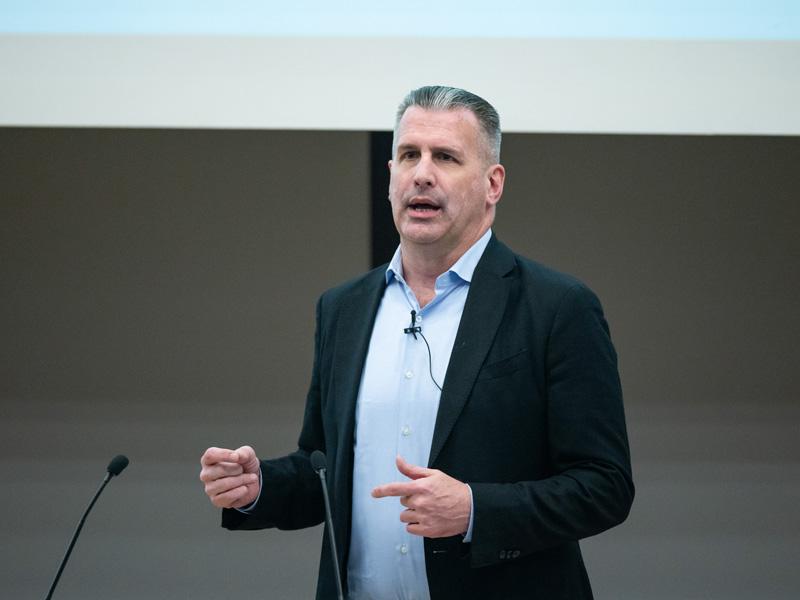
Breakthrough technologies such as AI are widening the gap between tradition and innovation in higher education, said Aaron Yaverski, regional vice-president for EMEA at Turnitin, when speaking at the THE Digital Universities UK 2024 event. Generative AI is transforming how students learn and blurring the boundaries of academic integrity, posing new challenges for educators.
Turnitin is an industry leader in the higher education space, providing digital solutions to streamline grading, deter plagiarism and improve student outcomes. Yaverski spoke about maintaining academic integrity amid fast-paced technological change. ā€œItā€™s hard to believe that it was just over a year ago that ChatGPT first came out,ā€ said Yaverski. Since its launch in November 2022, ChatGPT has sparked significant changes in many sectors, including higher education. ā€œAt the time, I remember thinking this was a game changer ā€“ not just for society but for education.ā€
ā€œThere is a lot of fear around AI,ā€ Yaverski noted. ā€œBut I believe it will make us more productive and provide higher-paying jobs.ā€ More importantly, AI is here to stay and itā€™s important to embrace the technology in partnership with learners, helping them leverage it effectively, he added. For instance, students can use AI to complete routine tasks so that they can devote more time to the advanced cognitive demands of their subjects.
ā€œAt Turnitin, we believe that AI will be a very important tool within education,ā€ Yaverski continued. ā€œWe believe that future employers of our current students will expect them to know how to use AI and itā€™s going to be very important in what they do.ā€
AI can become a world-class tutoring aid, said Yaverski. However, itā€™s important to prevent AI from negatively impacting the learning process and make sure that students donā€™t use AI to write entire papers without critically engaging with their course materials.
While traditional methods of plagiarism continue to threaten academic integrity, they are relatively easy to detect. But AI operates differently, said Yaverski. While many view Turnitin as the ā€œplagiarism policeā€, its detection tool is not designed to ā€œcatchā€ students, he said. The tool has been built to help students learn and assist educators in supporting students. Turnitin offers a tool that can provide insights and ideas to empower educators to initiate conversations with students and encourage reflective thinking.
ā€œWe need the right policies to guide students on how to leverage AI,ā€ said Yaverski. He spoke about the concept of the , highlighting how identifying AI writing in studentsā€™ assignments is only one piece of the puzzle surrounding AI-generated writing in higher education. Itā€™s not about using digital solutions like Turnitin to simply determine whether a student has used AI but understanding why and where, Yaverski explained. Solving the AI writing puzzle means more than just finding out how students are using AI, but how we can help them use it better.
The speaker:
- Aaron Yaverski, regional vice-president for EMEA, Turnitin
about Turnitin.
