
Embracing technology to drive student-centric innovation




D2L
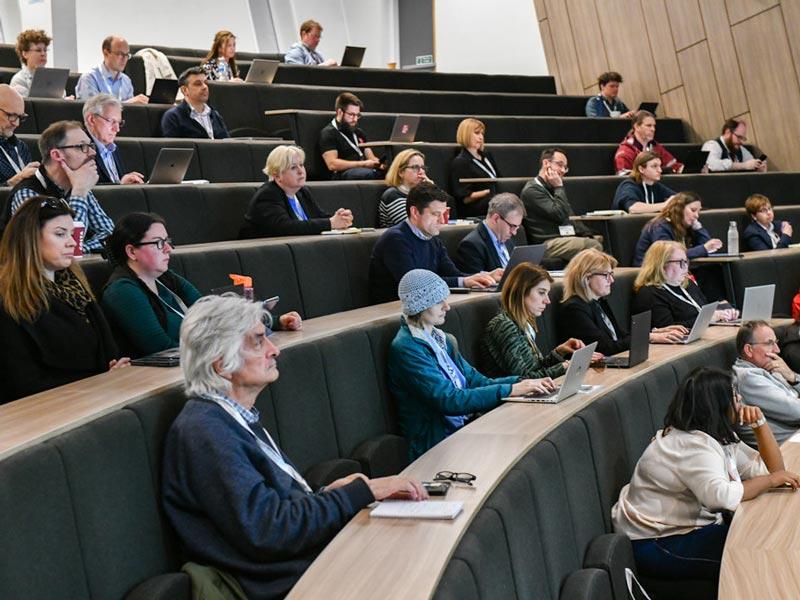
The London Institute of Banking and Finance (LIBF), part of Walbrook Institute London, has been delivering professional qualifications for the financial services and banking industry for nearly 150 years. It currently offers more than 30 educational programmes in over 120 geographic locations. Technological innovation has empowered LIBF to meet market demand and focus on its learner experience, said Claire Harding, director of operations at the institute, during a session at the 2025 THE Digital Universities UK event. ā€œWe wanted to hone in on student experience and customer-centricity to make the student journey as good as possible,ā€ Harding said.
In 2020, the institution implemented D2Lā€™s learning management system, Brightspace. ā€œMoving to Brightspace provided us with an opportunity to redevelop all of our programmes,ā€ said Danny Ball, digital learning manager at LIBF.
In 2024, LIBF started to standardise its programmes, which allowed it to ā€œbreak down the content into smaller reusable units that donā€™t need to live in one particular programmeā€, Ball explained. This meant that LIBF was able to respond to market needs and quickly develop new programmes by stacking different modules together.
LIBF also introduced certificates of completion and digital badges. ā€œOne key thing we can do for a student is to give them the opportunity to share their success,ā€ said Harding. ā€œIt keeps them intrinsically motivated to keep going.ā€
The institute is working to innovate assessments. Currently, many students attend external examination centres. However, it is investigating new tools to provide a secure, proctored testing environment, said Ball. These tools will integrate directly into the Brightspace system. ā€œWeā€™re moving to a situation where learners can book and take their exam 24 hours a day with no upfront bookings,ā€ he added. This will make the programmes more convenient and accessible for students.
LIBFā€™s learner-focused approach promotes lifelong learning among its graduates. ā€œIf youā€™re building a customer-centric, fully immersive experience, youā€™re going to increase lifetime value because students will want to stay with you,ā€ said Harding. ā€œWithin that, youā€™re also reducing your acquisition costs because someone who has an attachment to your brand is simpler to engage with and keep.ā€
Ball said that LIBF was embracing AI tools in areas such as virtual tutoring, introduction material and revision content, but underscored that these technologies do not serve as a substitute for human expertise. ā€œItā€™s not replacing subject matter experts, but it allows us to produce initial drafts that can then be reviewed and verified by those experts,ā€ he added.
Both Harding and Ball emphasised that student feedback is integral to the instituteā€™s success and that the learner experience has improved since implementing the Brightspace system. It has incorporated ā€œtemperature checksā€, which are short surveys embedded in the learning material, so that learners can give swift feedback. ā€œThis gives us a really rich data source to be able to determine virtually in real-time what our students think about our courses, what they donā€™t like and what we can change,ā€ said Ball.
The speakers:
- Danny Ball, digital learning manager, LIBF, part of Walbrook Institute London
- Claire Harding, director of operations, LIBF, part of Walbrook Institute London
about D2L Brightspace.
about LIBF, part of Walbrook Institute London.
